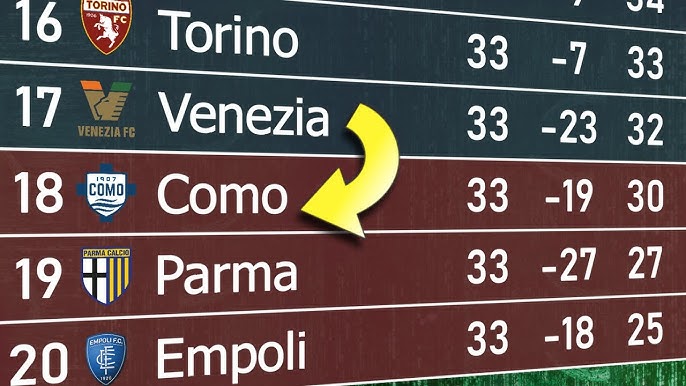
The 2024/25 Serie A table offers more than a snapshot of who is winning; it encodes form, tactical trends, and market expectations that can shape smarter bets when interpreted carefully. However, the same standings can be dangerously misleading if you read them without context, timing, or an understanding of how bookmakers price information into odds.
Why the 2024/25 Serie A table matters for bettors
League tables condense a full season’s worth of performance into a simple hierarchy, and that hierarchy strongly influences both public perception and bookmaker pricing. When Napoli, Inter or another contender sits near the top after 20–25 matches, that placement usually reflects sustained attacking output, defensive stability, and squad depth rather than short-term luck. For bettors, this means the table is a starting point for identifying which teams consistently convert chances into points and which sides are drifting toward the relegation zone and carrying higher downside risk.
Reading basic table columns as betting signals
Each column in the Serie A standings encodes a different type of betting signal, and combining them reveals whether a team’s current position is supported by robust underlying performance or fragile margins. Matches played, wins, draws, losses, goals for, goals against, goal difference, and points each point toward particular patterns that matter when deciding between 1X2, totals, or handicap bets.
How key stats translate into betting implications
Understanding how table metrics map to betting opportunities helps distinguish genuine edges from narrative-driven bets.
| Table metric | What it usually reflects | Typical betting implication |
| Wins / losses | Consistency in converting chances into results over time. | Strong win records shorten moneyline odds; value may shift to handicaps or totals. |
| Goal difference | Balance of attacking output and defensive solidity. | High positive GD supports lower risk on win/draw; extreme GD can justify handicap backing. |
| Goals for (GF) | Chance creation and finishing quality. | High GF supports over-goals or team-total overs if not fully priced into odds. |
| Goals against (GA) | Defensive structure, pressing, and error rates. | High GA suggests value on both-teams-to-score or overs; low GA supports unders or win-to-nil angles. |
| Recent form segment | Short-run momentum and tactical adaptation. | Sudden upswings or drops may move odds slowly, creating temporary mispricing. |
Bettors who treat these metrics as interconnected signals rather than isolated numbers often find more nuanced positions, such as pairing a top-four side’s strong goal difference with an Asian handicap rather than a heavily compressed moneyline price. Equally important, a team with modest points but improving goal difference and form might be under-rated in upcoming fixtures, especially when public attention is locked on headline positions rather than directional trends.
What the 2024/25 standings reveal about style and totals
Over the course of 2024/25, Serie A’s table and results show clear patterns in how certain teams approach matches, with some sides leaning toward controlled, low-scoring contests and others embracing open, high-variance football. Napoli and Inter’s positions near the top are closely tied to strong goal returns, while mid-table and lower sides often oscillate between conservative, survival-focused tactics and occasional expansive performances. For totals bettors, the relationship between goals for, goals against, and position can highlight where bookmakers might shade lines upwards or downwards based on reputation rather than current-season reality.
A practical way to use this information is to track whether a team’s total goal count per game aligns with its historical image; clubs traditionally seen as defensive may be playing more aggressively, but markets can take time to fully adjust. When a relegation-threatened side starts conceding heavily yet still pushes for goals late in matches, over-goals and both-teams-to-score markets can hold better long-term value than repeatedly backing or opposing them in the 1X2 market.
How the table interacts with odds and public bias
Bookmakers use standings as a major input when pricing odds, but they also anticipate how the public overreacts to visible league positions. Top-four teams draw heavy recreational money, which often compresses their odds, while mid-table clubs and struggling sides can become under-valued when their performances are stronger than their raw points totals suggest.
From a bettor’s perspective, the Serie A table is both an information source and a behavioral trigger, because casual bettors frequently anchor on rank rather than matchup specifics. When first meets fifteenth, the line between a justified short price and an overreaction depends on how the underlying statistics—goal difference, recent form, injuries, and schedule congestion—compare to the headline gap in points.
When table-based betting logic breaks down
There are repeated points in a season when treating the table as a pure performance ranking leads to inaccurate conclusions and misplaced bets. Early in 2024/25, small samples amplify randomness, so a couple of fortunate wins or unlucky losses can create a distorted picture of team quality that lingers for several matchdays. Late in the campaign, fixture-specific motivations—European qualification battles, mid-table comfort, or relegation anxiety—matter more than season-long averages.
Cup involvement, injuries, and coaching changes also disrupt any straightforward reading of the standings, because teams can shift tactical priorities or rotate lineups in ways the table alone cannot show. Bettors relying purely on points and rank risk missing inflection points where a struggling side becomes more competitive or a high-flying team subtly declines due to fatigue or strategic shifts toward continental competitions.
Using the table inside a structured, data-driven process
For bettors who prioritise structured analysis over intuition, the table becomes one layer in a broader data workflow rather than the final word on team strength. Integrating standings with match-level data—shots, xG proxies from public stats hubs, disciplinary records, and schedule density—allows you to check whether a team’s league position is supported by sustainable metrics or powered by volatile factors such as hot finishing streaks.
In practice, this means building a checklist for each bet: confirm the team’s rank and goal difference, review its last five results, cross-check for over- or underperformance relative to chance creation, and then compare that information to the odds provided by different bookmakers. When the numbers indicate a team is better than its position suggests, you look for value spots in markets such as Asian handicap or draw-no-bet, instead of blindly backing teams that sit near the top simply because they are higher in the table.
How table awareness shapes decisions around UFABET
In a season where the standings are tight in both the European race and the relegation battle, bettors who apply a disciplined reading of the table often approach individual fixtures with a more nuanced sense of risk, especially when they move between different operators. When a bettor recognises that a mid-table side with strong goal difference but modest points is quietly improving, that awareness changes how they assess alternative prices and markets presented by แทงบอล ufa168, because the apparent mismatch in rank may conceal underlying balance between the teams. Over time, repeatedly cross-checking table context against available odds helps turn the standings from a simple information source into a filter for separating emotional bets from structured, season-aware decisions.
Where league position meets the wider casino online ecosystem
As the 2024/25 campaign unfolds, the spread of digital football wagering options means that the same league table can influence how bettors navigate a wider ecosystem of sports-focused gambling experiences. When someone develops a sharper understanding of why a club’s rank, goal difference, and form either support or contradict the odds, that mindset often carries over into other verticals hosted by a casino online, reinforcing habits of checking mechanics, volatility, and underlying probabilities rather than responding purely to surface impressions. Instead of treating the Serie A standings as a shortcut to “obvious” winners, the disciplined bettor uses them as one reference point in a broader approach that questions whether strongly favoured outcomes truly warrant the risk implied by the price being offered.
Summary
The 2024/25 Serie A table is a powerful tool for football bettors because it compresses a season’s results into a structure that points to consistent strengths, weaknesses, and stylistic patterns. Yet its real value emerges only when those rankings, goal differences, and form lines are mapped against odds, situational motivations, and team-level changes that the standings alone cannot capture. Used as one component in a data-driven process rather than a shortcut to easy answers, the league table becomes a framework for identifying where market perception diverges from on-pitch reality throughout the 2024/25 Serie A season.
Leave a Reply