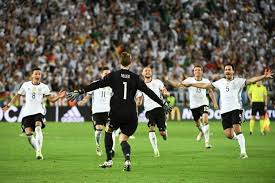
The 2016/17 Bundesliga season featured clear patterns in how penalties were distributed across clubs, both in terms of awards in their favour and spot‑kicks conceded against them. Understanding which teams repeatedly found themselves at the penalty spot, and why, sheds light on tactical tendencies, defensive habits, and the way referees respond to certain styles of play over a full campaign. For bettors and analysts, those patterns are not trivia but indicators of repeatable behaviours that can influence match outcomes more than many realise.
Why focusing on penalties in a single season makes sense
Penalties are rare but high‑impact events, so their distribution over 34 matches can swing league tables and betting results significantly, especially in tight games. In the 2016/17 Bundesliga, the combination of attacking styles, defensive pressure, and refereeing interpretation led to some teams appearing far more often on penalty highlight reels than others. When a side consistently wins spot‑kicks, it may reflect sustained pressure in the box or specific dribbling profiles, whereas frequent concessions often hint at structural weaknesses or risky defending.
Looking at a single season also isolates tactical and personnel contexts that might be washed out in longer‑term averages. The 2016/17 campaign, which ran from late August 2016 to May 2017, formed a cohesive tactical snapshot of German top‑flight football during that period, with Bayern Munich again winning the title but facing a variety of styles beneath them. Because penalty trends are sensitive to coaching choices, pressing structures, and even set‑piece routines, analysing them within that bounded timeframe reveals cause‑and‑effect links that are harder to see in generic multi‑year summaries.
Which teams won the most penalties in 2016/17?
Public stat resources for the 2016/17 Bundesliga provide team‑level breakdowns of penalties awarded, listing how many each club received and how often they converted those chances. One detailed stats page for that season ranks Bundesliga teams by penalties awarded, highlighting that certain sides, such as Bayer Leverkusen and Freiburg, sat near the top of the table with relatively high counts of penalties and differing conversion rates. For Leverkusen, a high number of awards combined with a modest conversion percentage showed how volume and efficiency can diverge.
The teams collecting many penalties usually shared common traits: frequent entries into the opposition box, one‑v‑one dribblers who draw fouls, and set‑piece schemes that create contact‑heavy situations. Over 34 matches, these characteristics translate into repeated opportunities for referees to make high‑stakes decisions in their favour. Bettors looking back at 2016/17 can see that those clubs not only enjoyed extra scoring chances but also introduced more volatility into match scorelines, as each penalty carried both goal potential and psychological impact on opponents.
Which teams conceded penalties most often?
On the other side of the equation, defensive records for penalties conceded show a different set of teams repeatedly putting themselves at risk inside their own area. Databases focusing on Bundesliga penalties list each club’s tally of spot‑kicks given away, alongside how many were converted or missed by opponents. Separate resources that track goals conceded from penalties, rather than just the number awarded against, show that sides such as Werder Bremen and Ingolstadt appeared high on the list for goals conceded directly from spot‑kicks during that season.
Teams that concede penalties frequently tend to share identifiable structural issues: defenders who lunge into tackles, slow reactions to quick one‑twos in the box, or zonal marking that breaks down under lateral movement. Over 2016/17, some relegation‑threatened teams exhibited those patterns, compounding their general defensive problems with self‑inflicted damage from the spot. That’s crucial because penalties conceded are not just isolated mistakes; they often signal underlying spatial or athletic disadvantages that opponents can target deliberately, especially in high‑leverage matches late in the season.
Table: contrasting teams that often won vs conceded penalties
Before diving into deeper tactical mechanisms, it is useful to frame the discussion in a simple comparative structure. The following conceptual table outlines how typical team profiles in the 2016/17 Bundesliga might fall into categories based on penalties awarded and conceded, using representative traits rather than exact club names.
| Profile type | Penalties won | Penalties conceded | Typical team traits | Likely impact on results |
| High won, low conceded | Many | Few | Aggressive attack, controlled defending | Positive goal difference swing |
| High won, high conceded | Many | Many | Open games, end‑to‑end transitions | Volatile scorelines, big swings |
| Low won, high conceded | Few | Many | Passive attack, clumsy defending | Negative swing, relegation risk |
| Low won, low conceded | Few | Few | Low box entries both ways | Tight games, fewer shocks |
Interpreting this structure for 2016/17, teams matching the “high won, low conceded” profile gained a structural edge in narrow fixtures because the net balance of penalties tilted in their favour. Those closer to “low won, high conceded” faced an uphill struggle, since each penalty against often arrived in moments where their attack was not strong enough to compensate at the other end. This framework highlights why penalties are more than random noise; they connect directly to styles of play that either amplify or reduce risk in both penalty areas.
Mechanisms that created frequent penalties in the 2016/17 Bundesliga
Penalty frequency in that campaign did not emerge randomly but from repeatable sequences. Attacking teams focusing on wide overloads and cut‑backs often forced defenders into panicked body positions, increasing the likelihood of handball or late challenges. Several Bundesliga analysts examining the first two‑thirds of the 2016/17 season noted trends in pressing intensity and transition speed, pointing out that rapid entries into the box gave attackers a split‑second advantage that defenders struggled to handle cleanly. The cause‑and‑effect chain ran from pressing → turnovers in dangerous zones → rushed defending → penalties awarded.
On the defensive side, penalties conceded often stemmed from poor coordination rather than individual hot‑headedness. Centre‑backs stepping out at the wrong moment or full‑backs tucking in late left gaps that team‑mates tried to cover with last‑ditch tackles. Over a long season, the same miscommunications produced multiple spot‑kicks against certain clubs, revealing that their defensive structures were not fully suited to the pace and verticality of Bundesliga attacks at the time. The outcome was a concentration of penalties in specific match‑ups, which sharp bettors could anticipate once patterns became clear.
Conditional scenarios: when penalty trends are repeatable
Not every spike in penalties is equally predictive. If a team’s high penalty count in 2016/17 came largely from a handful of matches with controversial decisions or unusual weather conditions, the underlying trend might not persist. However, when penalties arose from systematic behaviours—wingers repeatedly isolating slower full‑backs, or defenders consistently grappling on set pieces—the likelihood of repeat events in similar contexts increased. For example, when an attacking side faced the same type of high‑risk defence later in the season, the probability of another penalty‑driven outcome logically climbed.
Conversely, coaching changes altered the calculus. A mid‑season shift to a more compact defensive block could dramatically reduce penalties conceded, even if early‑season numbers were poor. Likewise, a new attacking scheme emphasising long shots rather than box entries might lower penalties won despite prior success from the spot. Analysts revisiting 2016/17 must therefore pair raw penalty statistics with tactical timelines to identify which trends remained valid by the season’s end and into the following campaign.
How bettors can incorporate 2016/17 penalty data into a data-driven approach
From a data‑driven betting perspective, penalty statistics from the 2016/17 Bundesliga serve as both an input and a cautionary tale. On one hand, historical records showing which teams accumulated above‑average penalties for and against help refine expected goal models and match simulations, particularly in scenarios featuring similar tactical match‑ups. On the other hand, a narrow focus on penalties can overstate their predictive power if it ignores the broader context of shot quality, defensive structure, and officiating trends that shape how often those situations arise. Integrating penalty data into a holistic model reduces the risk of overfitting to rare events.
In practice, bettors using 2016/17 data would be wise to treat penalties as modifiers to baseline expectations rather than core drivers. A team with a history of winning many penalties might merit a slightly higher projected goal output in future fixtures against reckless defences, but that adjustment should remain modest compared with shifts caused by injuries, tactical changes, or overall attacking strength. Similarly, clubs that conceded a cluster of penalties during that season need to be evaluated to see whether the defensive flaws behind those fouls persisted or were addressed in subsequent years through recruitment and coaching.
Where UFABET fits into applying penalty trends
When turning analysis into actual decisions, the environment in which bets are placed affects how effectively penalty trends can be exploited. If a bettor operates within a structure that offers detailed markets on Bundesliga matches—including goal lines, penalty‑related specials, and live in‑play options—the ability to react to emerging patterns from campaigns like 2016/17 becomes more practical. Under situational conditions where a sports betting service such as ufa168 เข้าสู่ระบบ provides both historical data snippets and real‑time pricing on events influenced by spot‑kicks, the user can track clubs that historically generate or concede many penalties and watch how odds shift when referees with certain tendencies are assigned. The central idea is not to chase every hint of a penalty but to compare implied probabilities against a personal model that accounts for how often those high‑leverage situations have genuinely arisen for each team over a meaningful sample.
Penalties, psychology, and the failure of pure numbers
While statistics chart how many penalties each Bundesliga team won or conceded in 2016/17, the psychological dimension strongly influenced how those events translated into results. For some clubs, early missed penalties created narratives of “curse” or “bad luck,” piling pressure on future takers and perhaps leading coaches to rotate responsibilities. That human reaction could temporarily depress conversion rates below what models based only on historical averages would expect. In contrast, teams with confident set penalty takers enjoyed a reinforcement loop where previous success reduced anxiety, making it more likely that future spot‑kicks were converted.
Defensively, players who had recently conceded penalties sometimes became overly cautious in the box, allowing attackers more space rather than risking another foul. That pendulum swing could shift the pattern of chances, replacing fouls with open‑play shots from favourable positions. Therefore, even if the raw count of penalties remained stable or fell, the overall danger posed by an opponent’s attack might not decrease. This illustrates why numbers from 2016/17 provide a starting point but must be interpreted through the lens of human behaviour when projecting future outcomes.
How casino online logic parallels real penalty variance
In probability‑based environments that simulate football outcomes, penalties often carry outsized influence on short‑term results, mirroring their impact in real leagues. Developers calibrate those systems by starting from empirical distributions—such as the observed frequency of penalties per match in seasons like the 2016/17 Bundesliga—and then layering random draws to determine when spot‑kicks occur and whether they are scored. Over time, those simulated competitions reproduce not only average penalty rates but also clusters of matches where individual teams appear to be unusually lucky or unlucky from the spot.
For observers engaging with a casino online context that incorporates football‑themed probability mechanics, awareness of real‑world penalty variance is instructive. It clarifies that streaks of many penalties for or against a particular simulated club do not necessarily indicate bias but instead reflect how randomness behaves when driven by realistic underlying probabilities. Comparing those virtual patterns to what actually happened in seasons like 2016/17 helps users understand why even fair models produce uneven, emotionally charged sequences of spot‑kick events. That insight reinforces the need to separate process from outcome when interpreting both real and simulated results.
Summary
The 2016/17 Bundesliga season showed how penalties, though relatively rare, can cluster around particular teams based on their attacking intent, defensive habits, and tactical organisation. Statistical records from that campaign document which clubs most often found themselves at the penalty spot, both for and against, and reveal that these trends frequently emerged from consistent behaviours rather than pure chance. For analysts and bettors, those patterns are most valuable when embedded into broader models that account for tactics, psychology, and officiating, rather than treated as self‑contained predictors. Used in that measured way, penalty trends from a single season become a practical lens for understanding how small, high‑impact events shape the larger story of a league campaign.
Leave a Reply